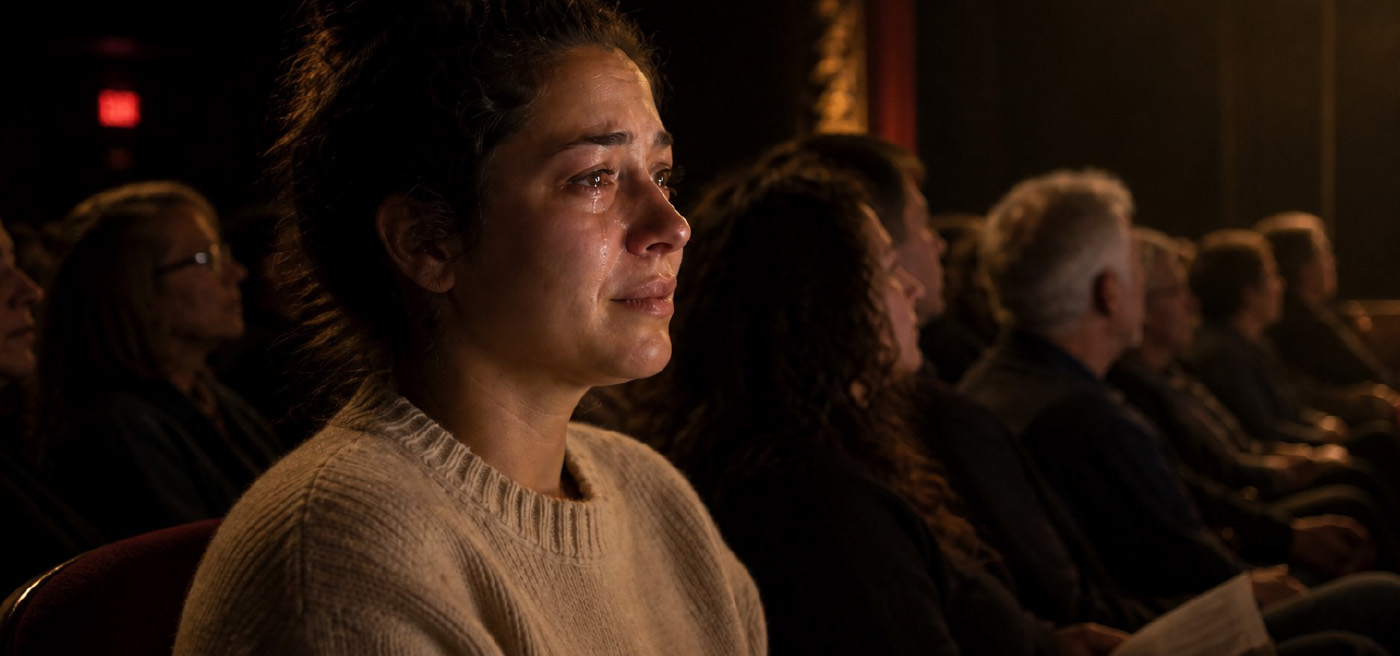
"Resonance" has become a broad catchall for an experience that felt like it meant something. Tears, chills, or a quieter confirming hit get treated as proof the experience went deep. Those are real, but they're also symptoms of a broader habit of treating the feeling as the product.
We know how to manufacture intensity without touching anyone's actual life. Peak design, music swells, a well timed reveal, lighting cues, a story beat that reliably creates gasp on cue... these are real crafts. They can make a room weep on schedule, and leave a person unchanged tomorrow. To be clear, emotion does belong in lasting work, but designing as if emotional intensity were the goal is how the field keeps optimizing the wrong layer and calling it "meaning."
I use resonance more in the physics sense. Two things tuned alike, and one moves when the other sounds.
A favorite song coming on under a hundred conversations in a loud room. You don't catch it because it's louder. You catch it because you're carrying a history with it (even if it's not one you're fond of). We play it into the room, and the people carrying that history are the ones who hear it. To the others, it's simply "atmosphere." We can't put the song into the guest. We can only activate what's already there.
That definition cuts against how most briefs use the word. The industry default treats emotion as the proof of depth. If they cried, it worked. If they got goosebumps, it landed. If the peak was big enough, the visit mattered. Peak-end is real science. People remember an episode by its peak and its ending. Designing good peaks and clean endings is great craft theory of how experiences get remembered. It's been stretched into a theory that if the peak was big enough, the visit mattered. That stretch is the problem.
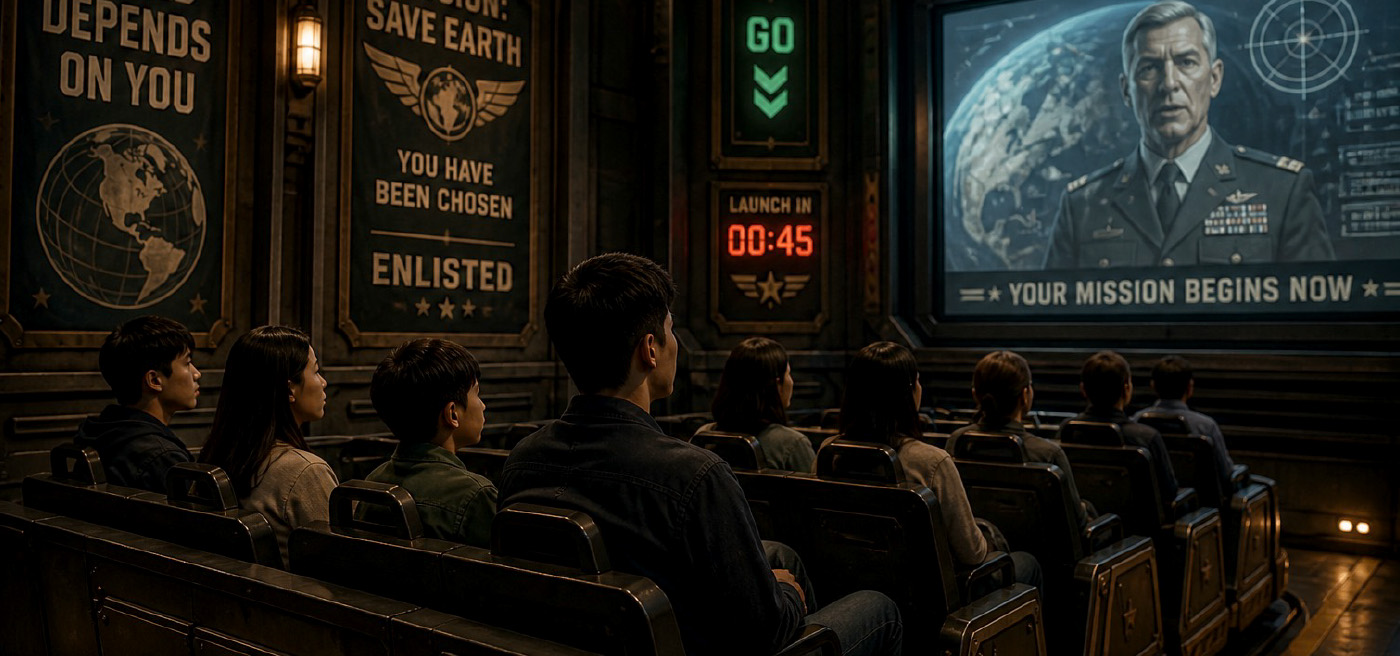
In some of our spaces it looks like the ride that enlists you to save the day... while you actually sit still and watch. Score rises, orchestra swells, the room lands on cue. The hit was real. The reviews will be good. But very little of themselves went in, and very little came out. The heroism was someone else's story they rented for four minutes. Whether it was fun or solemn while it lasted, their week didn't change.
What travels is often quieter than tears. The world was a little different than they thought, and they had to do something with that. Surprise and mismatch (a sincere suspicion that the map they arrived with was incomplete) crack a door emotion alone doesn't. Possibility is a revised picture of what can happen, including in the life they already have...

When we get serious about the takeaway, the brief often asks us to hunt it home. We tell a compelling story, which takes real craftsmanship to be sure. But the story is what we make. The takeaway is what lasts. Most of us design the story and hope for the takeaway. Then review language sharpens around "emotional impact," and another peak gets funded because peaks photograph clean and surveys smile. That's putting the song into them. And we already know what happens to anything you're told... (You rent it, and it's gone by Tuesday.)
Resonance as fit doesn't mean flattering what they already believe. The person who's sick of that song still hears it. Dissonance can be instructive. Sometimes the thing a guest bounces off is the thing working on them. More than one door into the story keeps resonance from collapsing into confirmation. Intent still matters. You instead design toward a clear difference between who walks in and who walks out. Resonance is how contact happens, but it's not the whole design.
If your review meeting only asks whether the beat "lands emotionally," you're measuring a symptom. Add the harder questions. What history would a guest need to be carrying for this to find them? What would they have to do with it after they leave? Where are we manufacturing a feeling because we don't trust discovery? Where would a quieter mismatch serve them better than a louder peak?
Emotion will keep showing up in good work. (Bodies are not optional, after all.) But we're not designing for the feeling as the product. We're designing for contact with something they already carry... and for a shift they can still use when the room goes dark.
Look at the last review you ran. Where did "lands emotionally" get funded because the quieter mismatch felt harder to trust?